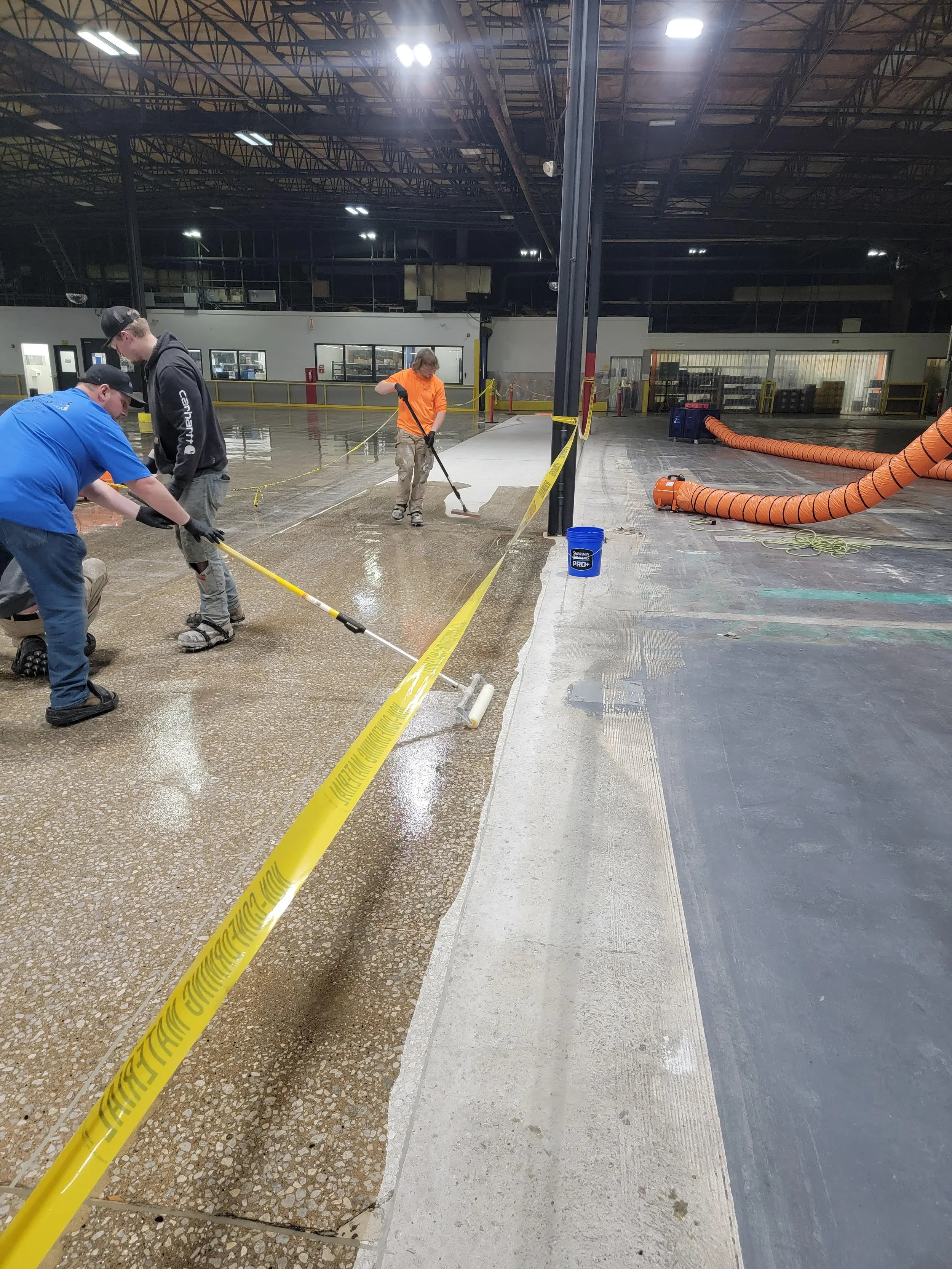
Explore Our Portfolio of Services
Explore our range of services designed to help you move forward with confidence, wherever you're headed next.
Epoxy Flooring Systems
✳︎
New Construction
✳︎
Renovations
✳︎
Commercial Design
✳︎
Epoxy Flooring Systems ✳︎ New Construction ✳︎ Renovations ✳︎ Commercial Design ✳︎
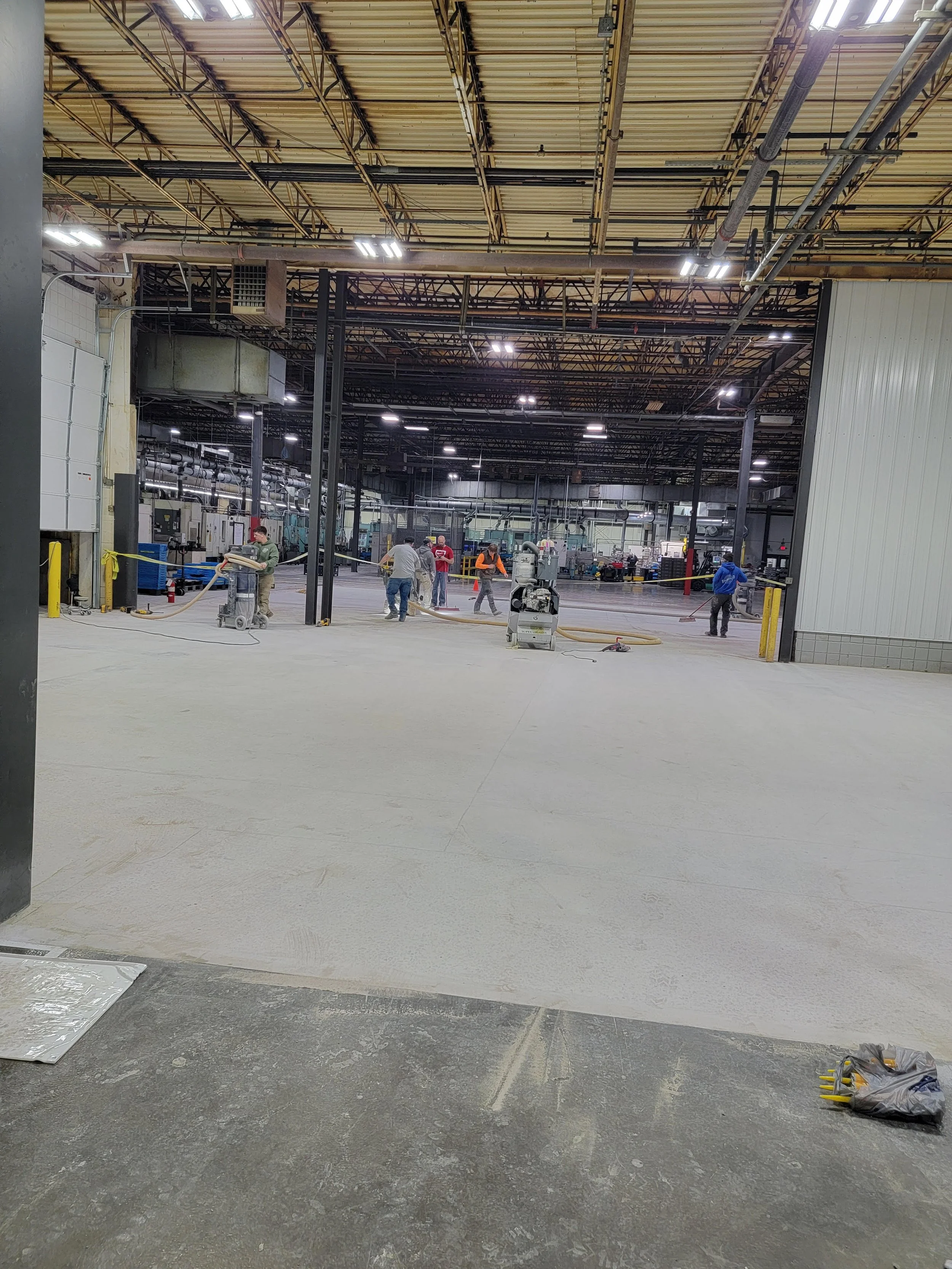
How Epoxy Flooring Works
Most epoxy systems are installed in layers:
Concrete preparation
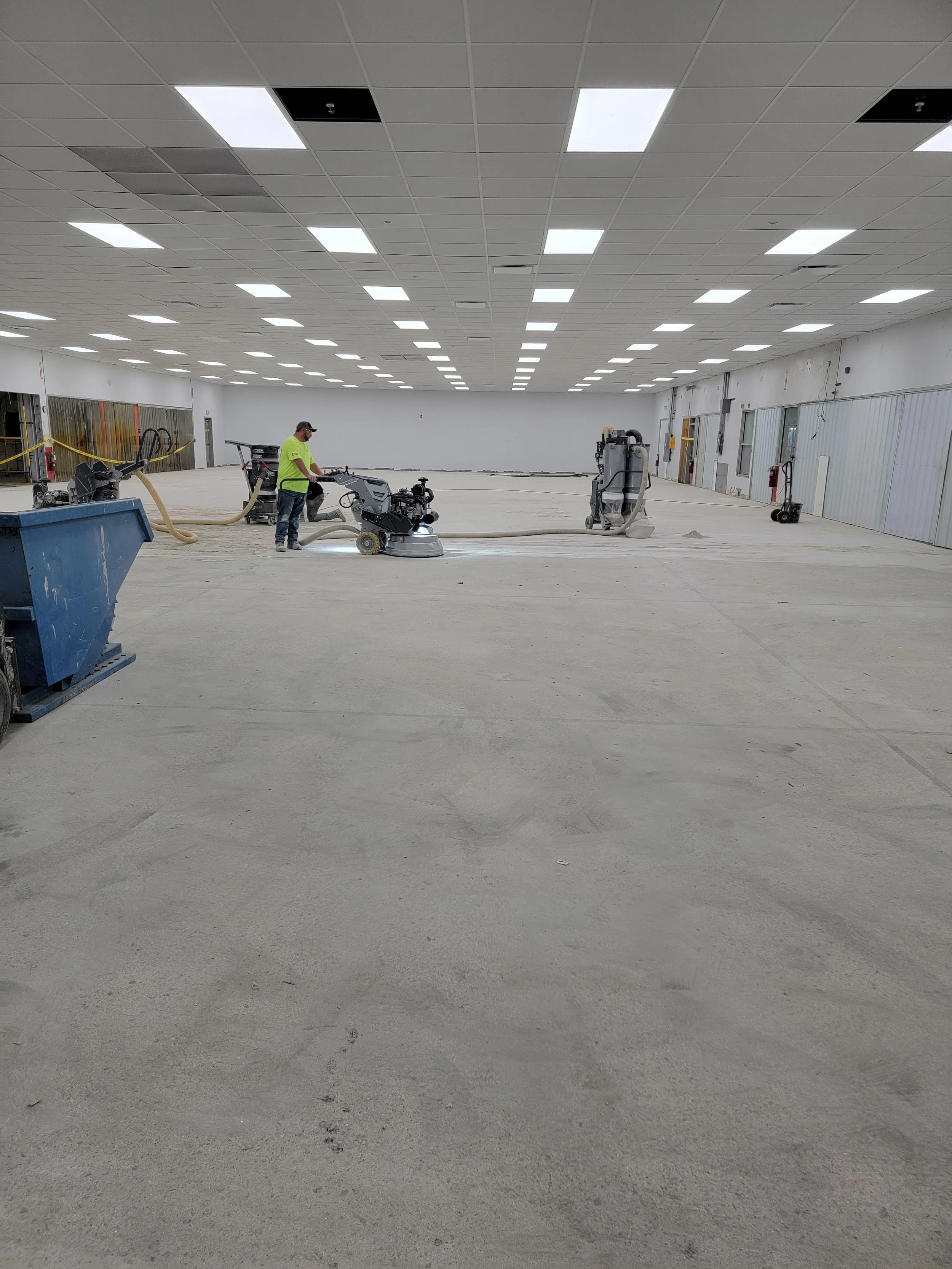
Grinding or shot blasting opens the concrete and removes weak or contaminated surface material so the coating can bond properly.Primer coat
Helps the resin soak into the slab and create a strong mechanical and chemical bond.Body coat or build coat
Adds thickness, strength, and the main color or decorative effect.Broadcast (flakes or quartz - if used)
Adds texture, color, and slip resistance.Topcoat
Seals the system, improves chemical resistance, and brings out the gloss or satin finish.
The type of resin, the thickness of each layer, and the texture of the final surface are what separate one "epoxy floor" from another.
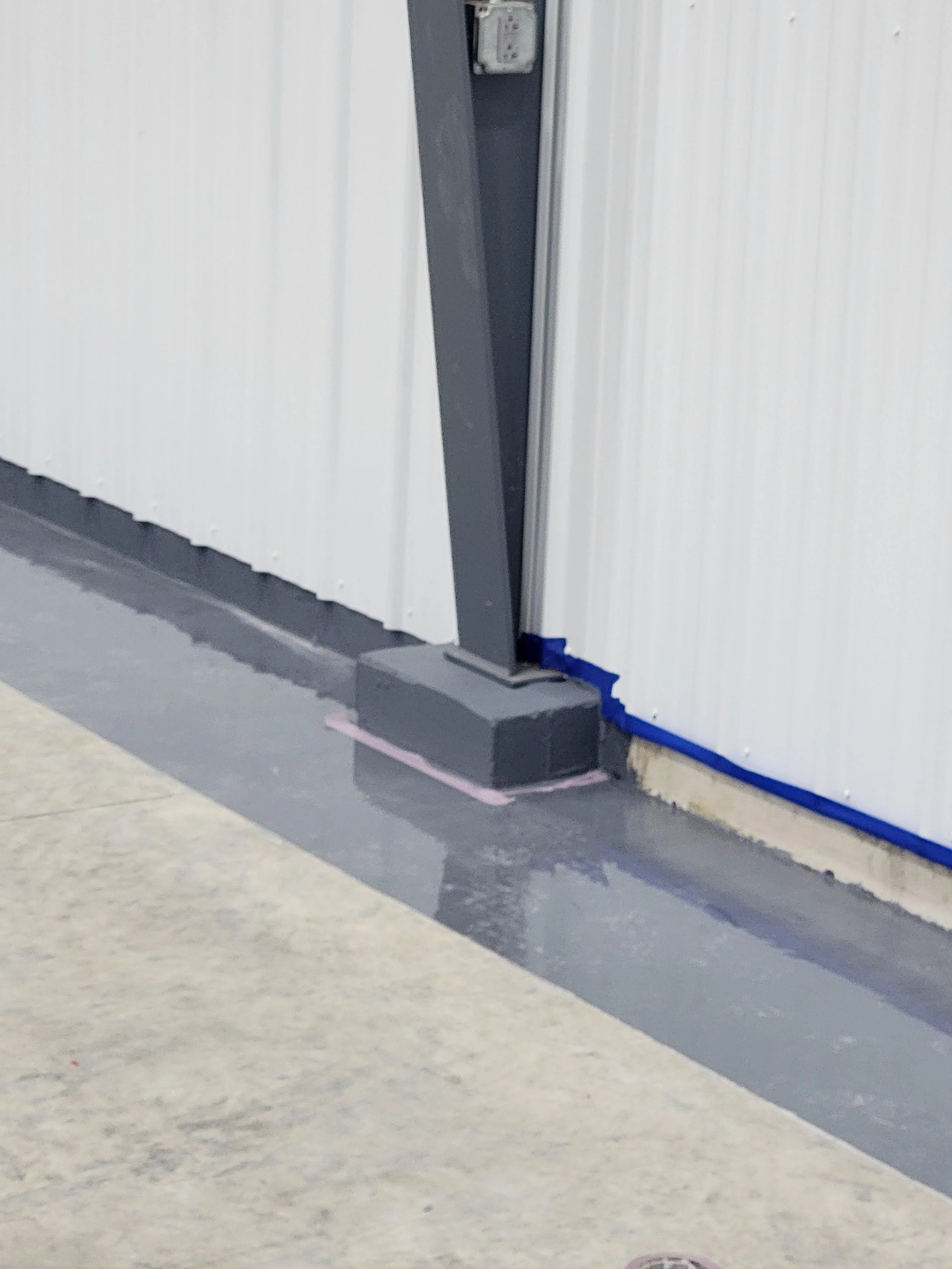
Self-leveling epoxy is the workhorse system. It is poured in liquid form and naturally levels itself, filling in small pits and evening out minor variations in the slab. Once cured, it creates a seamless surface that is tough, attractive, and easy to maintain.
You can think of it as a protective skin over your concrete that resists wear, tire marks, and many common chemicals.
Highlights:
Smooth, durable finish that stands up to daily traffic
Easy to sweep, mop, and scrub
Available in solid colors or decorative blends
Can be installed in different thicknesses for light or heavier use
Ideal for upgrading stained, old concrete into a clean, professional surface
Best for: Garages, warehouses, showrooms, commercial and light industrial spaces
Quartz epoxy combines epoxy resin with broadcast quartz sand to create a textured, highly durable surface. The result is a floor that provides traction under wet conditions and stands up to aggressive cleaning routines.
This system is built for places where people are constantly moving, floors are regularly washed down, and safety is non-negotiable.
Highlights:
Slip-resistant surface for wet or greasy areas
High resistance to moisture, cleaning chemicals, and spills
Dense, sanitary system with fewer places for bacteria to hide
Multiple color blends available to match your space or zoning needs
Ideal for high-traffic environments that demand both safety and hygiene
Best for: Commercial kitchens, restrooms, locker rooms, pool decks, labs, animal care, food and beverage areas
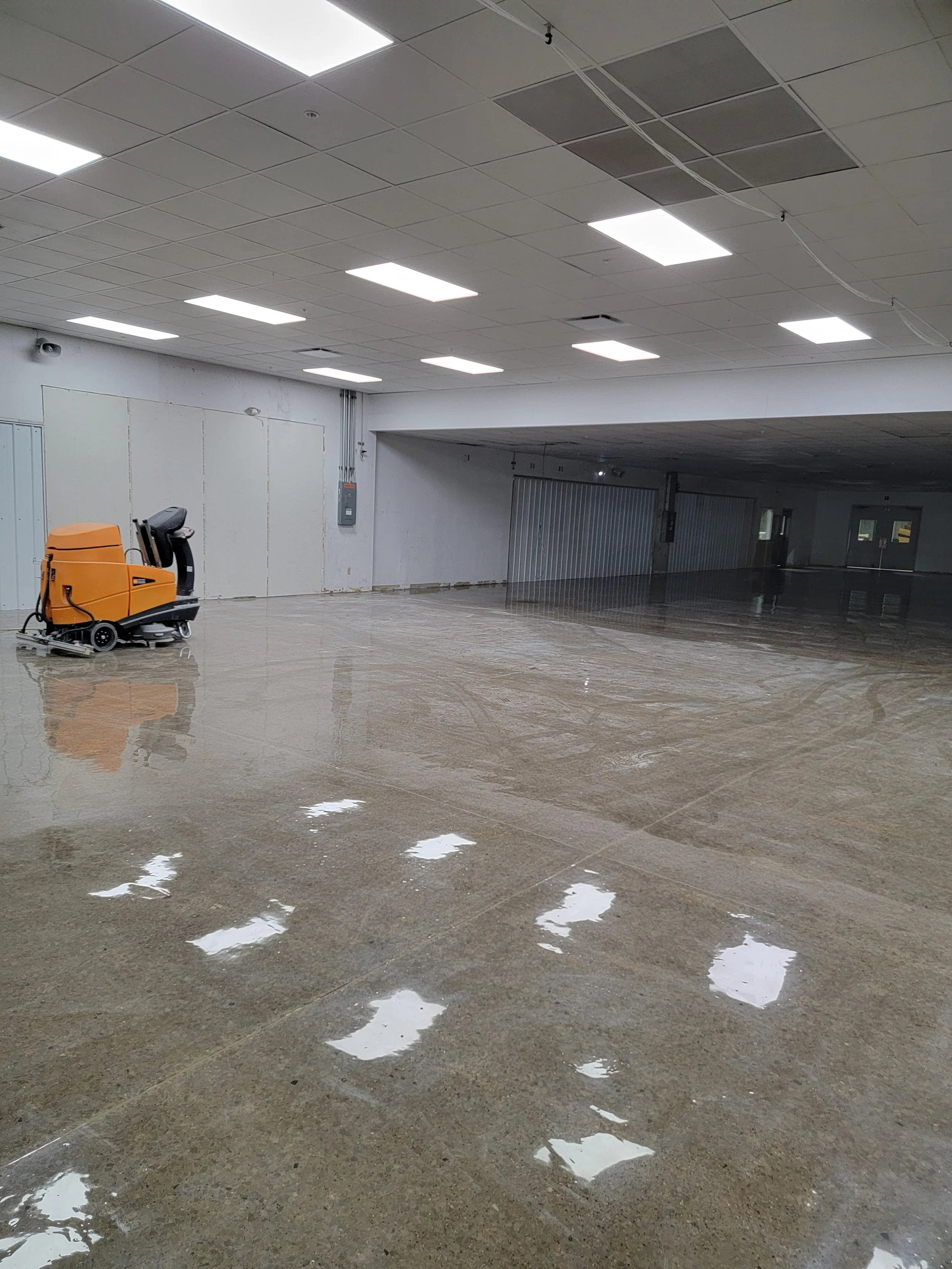
Anti-static epoxy (ESD epoxy) is engineered for environments where static discharge is a real risk. The system is designed to safely conduct static electricity away from the surface and disperse it through grounding points, helping protect equipment, components, and processes.
This is a specialty system that requires careful design and installation to meet performance requirements.
Highlights:
Controls static buildup and discharge across the floor
Strong resistance to chemicals, abrasion, and heavy traffic
Compatible with strict cleanliness and contamination standards
Often used with defined grounding plans and testing protocols
Ideal for high-value electronics and controlled manufacturing settings
Best for: Data centers, clean rooms, electronics manufacturing, laboratories, facilities with sensitive equipment
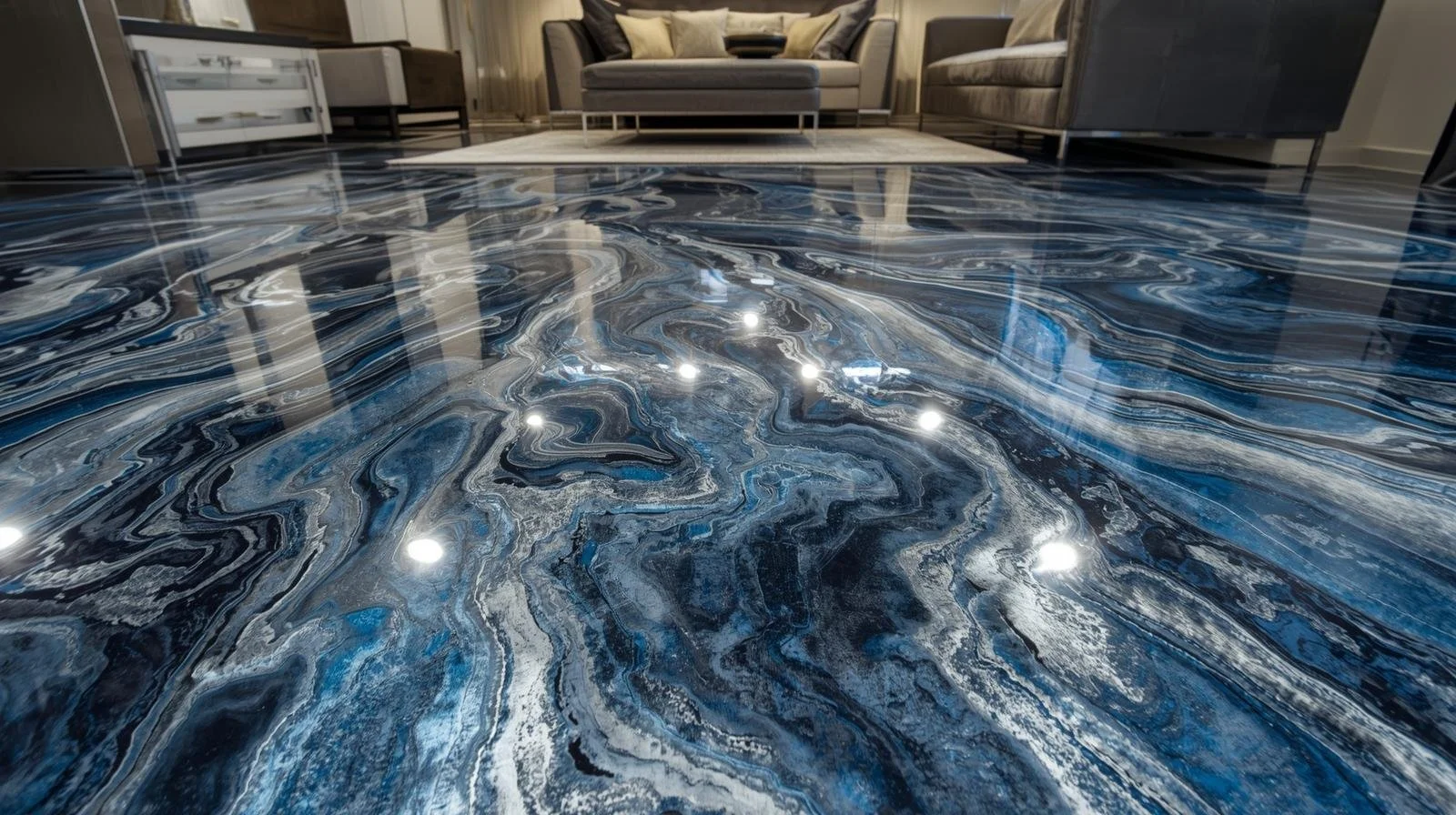
Metallic epoxy is performance with a showpiece finish. Special metallic pigments are swirled and moved through the resin to create a marbled, fluid look that changes with the light and viewing angle. No two floors ever look alike.
You get the strength of an industrial coating with the look of a custom, designer floor.
Highlights:
Striking 3D, high-gloss appearance that grabs attention
Great way to highlight branding colors or a feature area
Excellent chemical and scratch resistance when properly top coated
Seamless surface that is easier to clean than tile with grout lines
Ideal for spaces where first impressions matter as much as performance
Best for: Restaurants, offices, retail spaces, salons, lobbies, showrooms, custom garages
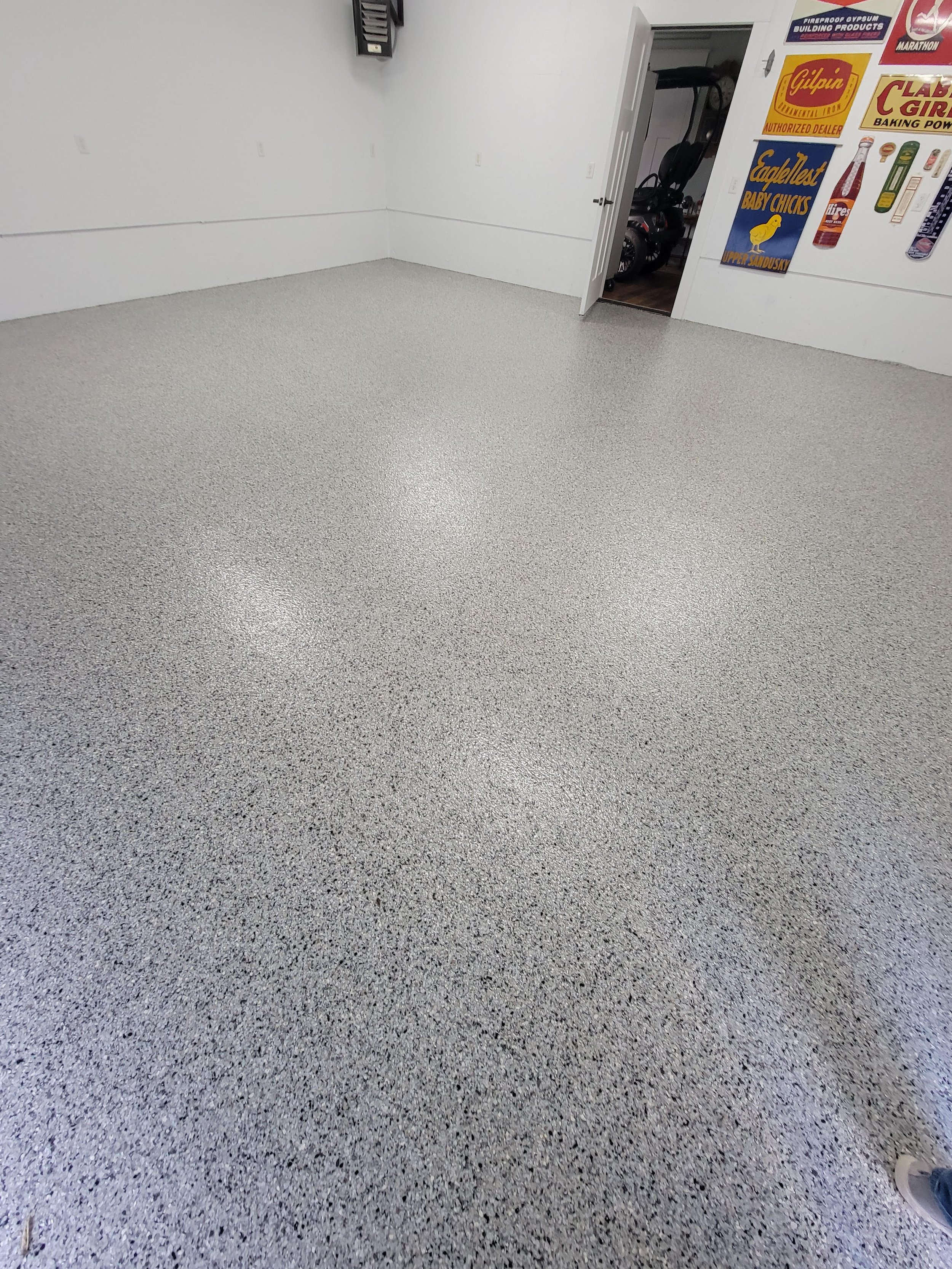
Flake systems use decorative vinyl chips broadcast into the epoxy and then locked in with a clear topcoat. The flakes add texture, visual depth, and grip while also helping to hide dust, dirt, and minor imperfections.
This is one of the most popular coatings for residential garages and many commercial spaces because it balances appearance, traction, and maintainability.
Highlights:
Clean, slip-resistant surface that feels solid underfoot
Speckled look hides dust, dirt, and minor wear between cleanings
Wide range of color blends, from subtle neutrals to bold mixes
UV-stable topcoats can be used to help resist yellowing in sunlit areas
Excellent choice when you want a "finished" look without being overly glossy or flashy
Best for: Garages, basements, showrooms, service areas, retail spaces, light commercial
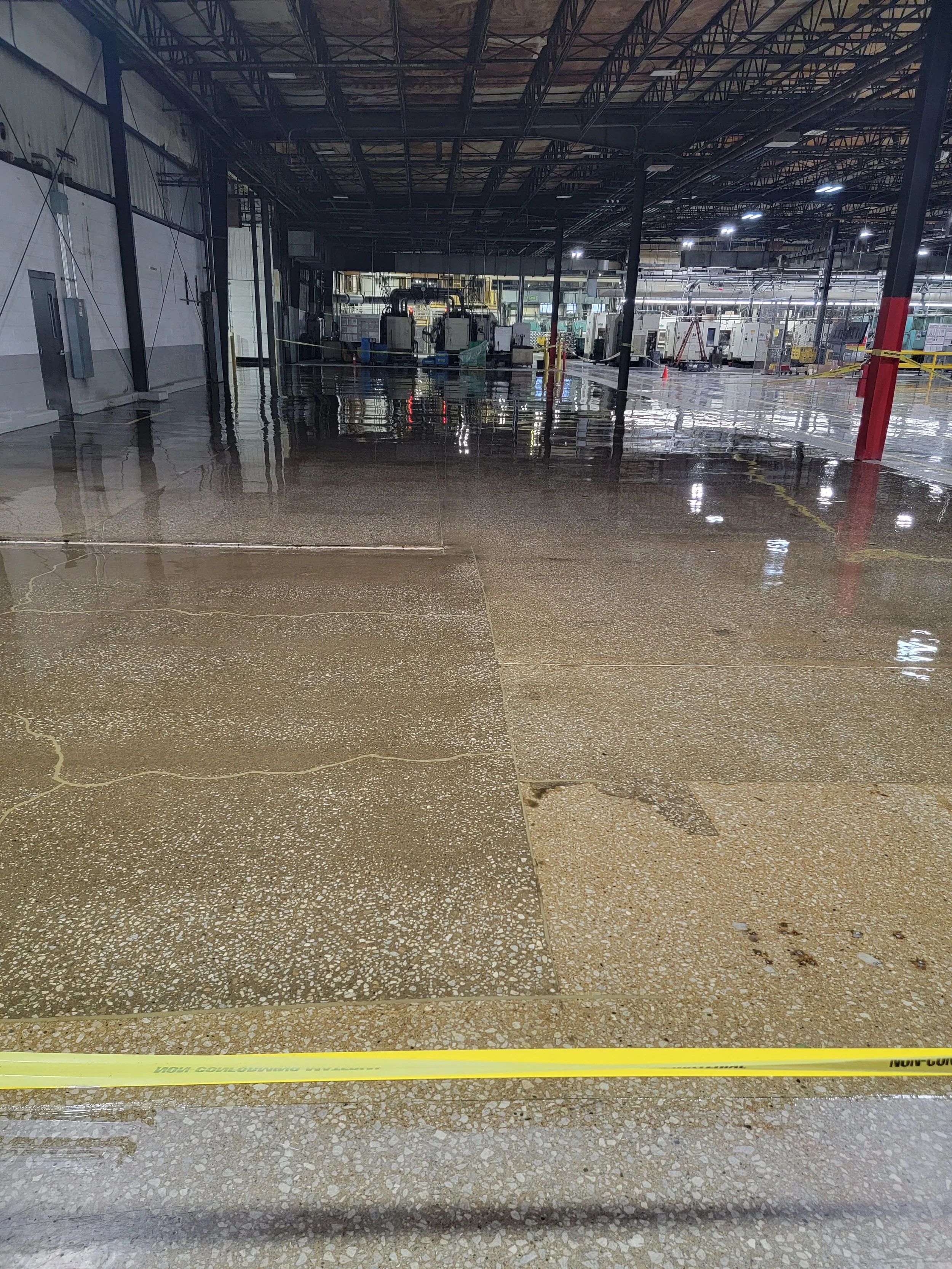
Mortar epoxy is the tank in the lineup. It combines epoxy resin with graded sand or aggregates to build a high-strength, troweled system that can be used to repair, level, and reinforce concrete.
This system is often installed where concrete is already spalled, cracked, or severely worn, or where extreme impact and load are part of daily operations.
Highlights:
Exceptional impact and compression strength
Can rebuild and resurface damaged concrete instead of full replacement
Handles constant forklift traffic, dropped tools, and heavy machinery
Can be used as a base layer under other epoxy or polyaspartic finishes
Long-term durability for demanding industrial environments
Best for: Factories, loading docks, machine shops, repair bays, impact zones, and heavily damaged slabs
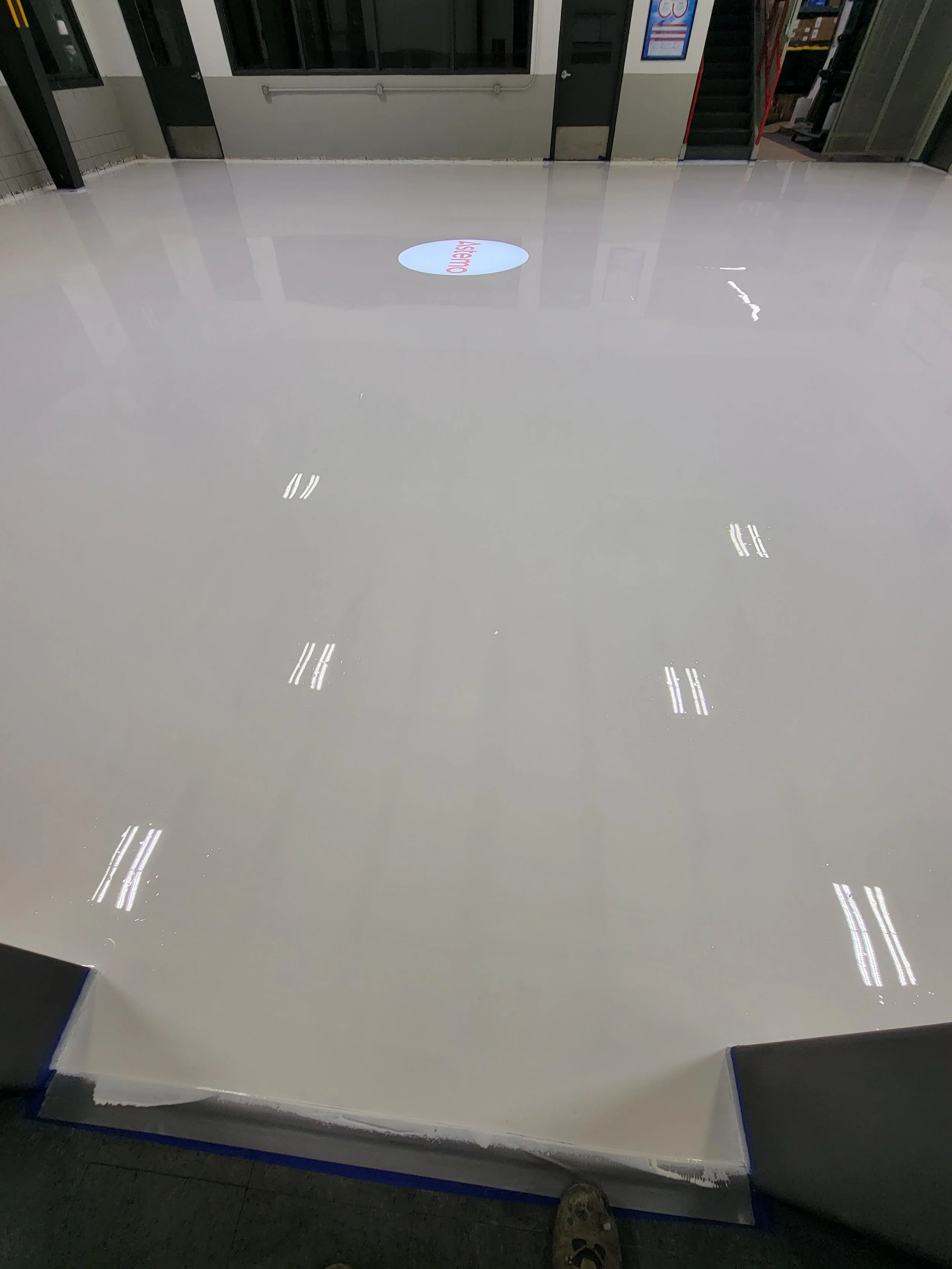
Many epoxy systems can be paired with polyaspartic topcoats to speed up return-to-service times and improve UV stability. This is especially useful for:
Facilities that cannot afford long shutdowns
Garages or shops that need to be back in use quickly
Areas exposed to sunlight where yellowing is a concern
Polyaspartics can sometimes be part of a full system, not just the topcoat, depending on the project.
“Communication was top-notch and the final outcome was even better than we imagined. A great experience all around.”
Former CustomerHow to Choose the Right Epoxy Floor for Your Space
When we design a floor, we focus on real-world conditions, not just a color chart. Some key questions:
Key Considerations:
What kind of traffic will the floor see?
Light foot traffic, heavy carts, forklifts, or vehicles.What is likely to hit the floor?
Oils, chemicals, food acids, hot tires, dropped tools, or nothing more than dust.How wet will it get, and how often is it cleaned?
Occasional mopping, constant wash downs, degreasers, or sanitizers.How much traction do you need?
High-grip for safety, smoother for easy rolling loads, or something in between.How important is appearance and brand image?
Strictly functional, or is the floor part of the customer experience.How much downtime is acceptable?
Can the area shut down for several days, or does it need a faster turnaround.
The best system is the one that fits your use, not just your favorite color.
From there, a general guide looks like this:
Need a tough, clean, professional surface for general use
→ Self-leveling epoxy.Want a statement floor in a lobby, office, showroom, or high-end garage
→ Metallic epoxy.Working in kitchens, restrooms, locker rooms, or labs where things get wet and sanitized often
→ Quartz epoxy.Looking for a clean, practical garage or retail floor that hides dirt and adds texture
→ Flake epoxy.Running electronics, data, or technical production with static concerns
→ Anti-static (ESD) epoxy.Dealing with damaged slab, heavy machinery, or impact zones
→ Mortar epoxy, possibly under another finish.